"How many words for my novel?"
Every new writer wonders how long their novel should be. The truth is, there is no magic number, only what your story needs to feel whole. Word counts and chapters are tools to guide you, not rules to hold you back.
It's a common question....
This is one of the most common questions new writers ask. How many words make a novel? How long should each chapter be? When do you know it’s enough? The truth is, there are guidelines, not rules. But understanding those guidelines helps you set realistic goals and shape your story at a comfortable pace.
What counts as a novel?
Word count varies by genre, audience, and style, but there are general ranges to keep you grounded.
-
Flash fiction: under 1,000 words
-
Short story: 1,000 - 10,000 words
-
Novelette: 10,000 - 25,000 words
-
Novella: 25,000 - 50,000 words
-
Novel: 50,000 - 110,000 words
-
Epic or series-length novel: 110,000 - 150,000 words and above
For first-time authors, aim for between 70,000 and 90,000 words. It’s long enough to build depth but short enough to hold focus. Once you know your story structure and pacing, you can adjust.
Genre word count guide
Different genres have different reader expectations.
-
Romance: 70,000 - 90,000 words
-
Mystery / Thriller: 70,000 - 100,000 words
-
Science Fiction: 80,000 - 120,000 words
-
Fantasy: 90,000 - 130,000 words
-
Historical Fiction: 90,000 - 120,000 words
-
Young Adult: 60,000 - 90,000 words
-
Middle Grade: 30,000 - 50,000 words
-
Literary Fiction: 70,000 - 100,000 words
Remember, these are not strict limits. They exist to give you perspective. A sharp, clean 65,000-word thriller can feel complete, while a sweeping fantasy at 130,000 words might still feel tight and necessary. The key is economy: every scene must earn its place.
How many chapters?
There is no set number, only what suits the rhythm of your story. Most novels fall between 15 and 40 chapters, but what matters is pacing, not count.
Think of chapters as beats of attention. Long chapters slow things down and allow for reflection. Short chapters quicken the pace and build tension. Mix them intentionally to create rhythm.
Prompts for planning chapters:
-
Where does the story naturally pause or shift perspective?
-
What is the emotional purpose of this chapter?
-
Does each chapter move the story forward or reveal something new?
If you are unsure, try writing a few chapters of different lengths and see how they feel. You can always adjust during editing.
Scene count and structure
A single chapter might hold one long scene or several shorter ones. Let your scenes dictate the chapter, not the other way around. Each scene should have a goal, conflict, and outcome. When a new event or mood begins, that’s often your cue for a new chapter.
Tip: When you finish a draft, check the balance. If every chapter is the same length, your pacing may feel flat. Try varying the rhythm.
Setting realistic goals
Thinking in word count helps track progress. Breaking your novel into manageable chunks keeps you motivated.
Here’s a simple plan for a first draft of about 80,000 words:
-
8 sections of roughly 10,000 words each, one per major story phase
-
Or 20 chapters of about 4,000 words each
-
Or simply 1,000 words a day for 80 days
Pick a rhythm that fits your life. Consistency is worth more than speed.
Prompts for planning:
-
How many days a week can I realistically write?
-
How many words can I manage comfortably in one session?
-
What milestones will keep me motivated?
When shorter or longer is better
Some stories demand space, others thrive on brevity.
-
If your story feels padded, trim scenes that repeat emotion or information.
-
If it feels rushed, add moments of reflection or sensory grounding.
-
Listen to your story’s rhythm. It often knows what length it needs to be.
If you’re unsure, get feedback from early readers. Ask where the story felt slow or fast. Pacing is as much about feeling as numbers.
First drafts vs final drafts
Your first draft’s length is not final. It’s common for a first draft to run long or short. Editing shapes it into form. Cut the unnecessary, expand what feels thin, and let the story find its natural size.
A useful guideline:
-
Draft one: focus on getting the story out.
-
Draft two: shape and tighten.
-
Draft three: refine language, balance pacing, and finalise structure.
By the third or fourth pass, your word count should settle into its true range.
How to track your progress
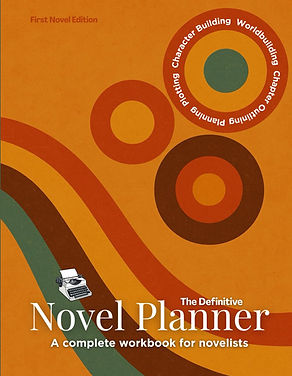
A novel planner with progress trackers makes this easy. Use it to log daily or weekly word counts and set milestones. Many planners also include chapter outlines and pacing charts. If you do not have one, a notebook or spreadsheet works perfectly well.
Mark word count goals at the top of each chapter page and tick them off as you reach them. It’s satisfying and helps you visualise your progress.
When to stop writing
You stop when the story feels whole. When every question that needs answering has been answered, and every scene serves a purpose. Word count is a guide, not a finish line. A short, complete story is always better than a long, aimless one.
Common pitfalls
-
Obsessing over word count before finishing the first draft
-
Forcing chapters to match in length
-
Adding filler to meet a target
-
Cutting too harshly just to shrink the total
-
Ignoring pacing and emotion in favour of numbers
How to know when it’s enough
You know it’s enough when the story feels balanced. When no scene drags and no scene feels missing. When you can read from start to finish and feel the rhythm is right.
A finished novel is not measured by its length but by its completeness.
Use your tools
If you have a novel planner, use it to track your chapters, scenes, and word goals. It keeps everything visible and stops the process from feeling overwhelming. If not, keep a simple notebook with a running tally and space to record ideas or changes.
Word counts and chapters are not cages; they are scaffolding. They help you build, but they come down when the structure stands. Focus on clarity, rhythm, and flow, and the numbers will fall into place naturally.
Summary: How many words should I write?
-
Word count depends on genre, audience, and story scope
-
A typical debut novel sits between 70,000 and 90,000 words
-
Flash fiction, short stories, novellas, and epics each have different length ranges
-
Genre expectations vary: fantasy and sci-fi run longer, romance and YA shorter
-
Most novels have 15 - 40 chapters, but pacing matters more than numbers
-
Chapters should follow the story’s natural pauses and emotional shifts
-
Use scenes to guide structure, not fixed lengths
-
Break your novel into manageable chunks or daily writing goals
-
Expect early drafts to run long or short; editing finds the right balance
-
Track your progress in a novel planner or notebook with word count goals
-
Listen to your story’s rhythm - end when it feels whole and satisfying
-
Avoid padding, rushing, or forcing uniform chapter sizes
-
Word count is guidance, not a finish line; a complete story always wins over a long one