Worldbuilding
Worldbuilding is the craft of building a believable setting that holds your story together. It covers everything from the rules of your world to the streets your characters walk, the rooms they live in, and the routes they travel. Done well, worldbuilding makes your story feel real, consistent, and alive.
Really big or really small, it needs to feel real.
Worldbuilding is not only for fantasy writers or creators of distant galaxies. It is the art of making your story’s world, whether real or imagined, feel complete and alive. Every novel needs it because readers want to understand the environment your characters move through and how that environment shapes their lives.
If you are writing a fantasy, sci-fi, or dystopian story, you will build your world from the ground up. If your story is set in the real world, worldbuilding becomes localisation: choosing where and when your story takes place, and showing how that place influences mood, culture, and behaviour. Either way, your goal is the same: to build a setting that feels real, consistent, and vital to your story.
Why worldbuilding matters
A strong world gives your plot weight and your characters context. It determines what is possible, what is forbidden, and what it costs to take action. Readers do not want lectures about your setting, they want to feel it working behind every line of dialogue and every decision a character makes.
Worldbuilding grounds your story in reality, whether that reality is 16th-century London or a city on a dying planet.
Start with foundations
Begin small, then expand:
-
Write one paragraph that captures what is unique about your world or location.
-
List five unchanging truths about that place. These could be physical (it rains constantly), social (the rich never travel on foot), cultural (the markets close at noon), or historical (everyone remembers the blackout).
-
Identify three forces that shape daily life: law, nature, or scarcity.
Sprinkle in prompts as you go:
-
What does a normal workday look like here?
-
Which unspoken rule everyone follows?
-
What is most likely to start an argument between locals?
Significant places
Every story relies on key locations that anchor its events. Whether you are inventing a floating city or describing the backstreets of Manchester, treat each major setting as a character in its own right.
Give every place a purpose, a mood, and something that could change.
-
The seat of power: a palace, town hall, boardroom, or online hub where decisions are made. Who controls it, and how do they hold power?
-
The public heart: a market, café, street corner, or train platform. What happens here, and what passes unnoticed?
-
The hidden layer: tunnels, service corridors, private chats, or forbidden forests. Who goes there, and why?
-
The personal space: a kitchen, a bedroom, a car, or a shared flat. What in this space reveals who your character is?
Prompts to explore places:
-
What would a stranger notice first?
-
What smell defines this place?
-
What has changed here since your protagonist last visited?
Maps that serve the story
Maps are not just for fantasy. They are tools that help you understand how your story moves.
Story maps:
-
Sketch the area where most events happen. A city, village, or even one street.
-
Mark travel routes, shortcuts, and barriers.
-
Note how long it takes to move between locations. Travel time shapes pacing.
-
Add obstacles that can create story tension: a river, a traffic jam, a checkpoint, a mountain pass.
Floor plans:
-
Draw simple layouts for settings you will use more than once: a house, café, police station, or spaceship.
-
Mark doors, stairs, sightlines, and hiding spots.
-
Note which parts matter to your scenes.
Prompts to guide layout:
-
What blocks a quick escape?
-
What sound fills this place during a quiet moment?
-
What does light look like here at sunset?
Linking places together
Stories live in the movement between places.
For real-world settings, think about how geography, traffic, and community shape that movement. For imagined worlds, build the same logic: what it costs to travel, who controls the routes, and what dangers lie between.
-
Decide how people travel and how long it takes.
-
Identify what connects your locations: train lines, magic portals, old footpaths, data networks, or gossip chains.
-
Include reasons your character might avoid the fastest route. Tolls, crowds, fear, or memory.
-
Use routes to build tension and pace.
Quick checks:
-
Can your character move believably from one place to another without convenience?
-
Do travel times remain consistent?
-
Can you describe at least one alternate route that would change the story if used?
-
Culture, systems, and everyday life
Even when your story is set in the real world, culture matters. Local habits, traditions, food, and slang define setting more than landscape ever could.
Focus on what shapes daily life:
-
Power and law: who decides, who enforces, and who resists.
-
Belief and custom: holidays, rituals, or fears that unite people.
-
Work and trade: what most people do, what they earn, what they dream of.
-
Technology or magic: how it is used, who controls it, what it costs.
-
Food and health: what is eaten, what is avoided, and what keeps people alive.
-
Language and communication: accents, idioms, local sayings, or text slang.
-
Weather and time: seasons, light levels, storm cycles, curfews, or work hours.
Prompts to dig deeper:
-
What small act shows a person’s status here?
-
What do people queue for?
-
What topic do strangers always discuss?
-
What is considered rude, even if it is normal elsewhere?
-
Genre and localisation
Every genre builds its world differently. A romance set in Edinburgh, a thriller in Los Angeles, or a sci-fi epic in orbit all depend on setting. Worldbuilding is as much about specificity as imagination.
A contemporary story uses localisation. You work with real streets, accents, and landmarks, but you still choose how they are shown. A single street can feel warm or hostile depending on what details you highlight.
For example, the same London café can feel cosy in a romance or cold and impersonal in a crime novel. You are not inventing the world, you are shaping perception.
Genre guides worldbuilding choices:
-
Fantasy: Geography, cultures, rules of the unreal.
-
Science fiction: Technology, systems, and environments.
-
Romance: Atmosphere, emotional tone, and social environment.
-
Crime: Geography, lines of sight, movement, and procedure.
-
Historical: Research, accuracy, and period-appropriate detail.
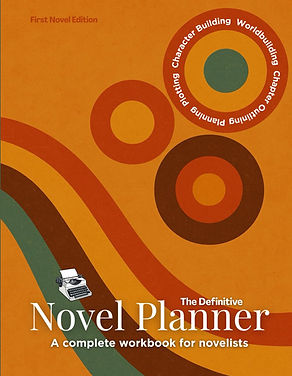
If possible, choose a novel planner that has a worldbuilding section tailored to your genre. The right prompts can save hours of trial and error.
The process
-
Scope: Define how large your world or location will be. Start small.
-
Anchor: Pick five key locations and give each a conflict or purpose.
-
Rules: Note five consistent truths that affect life or movement.
-
Routes: Sketch how your characters travel and what stands in their way.
-
Rooms: Draw or describe key interiors that matter to your scenes.
-
Texture: Add sensory details that bring places to life.
-
Test: Write a scene that moves between two settings. Adjust anything that feels off.
-
Integrate: Connect locations with acts and subplots.
-
Record: Keep everything in your planner’s worldbuilding section.
-
Refine: Update maps, notes, and rules as your draft evolves.
-
Weaving worldbuilding into scenes
Avoid long information dumps. Instead, let your characters interact with the world naturally. A traffic jam, a cold floor, or a missing landmark can tell the reader more than a paragraph of explanation.
Prompts for subtle worldbuilding:
-
What would a local ignore but a newcomer find strange?
-
What detail repeats between two places to show connection or contrast?
-
What single image could sum up this world’s mood?
-
Consistency and continuity
Keep a record of your world so it stays believable.
-
Store maps, names, timelines, and rules in one place.
-
Make sure distances, seasons, and technology stay consistent.
-
Track changes that happen as the story progresses.
Quick checks:
-
Are travel times realistic?
-
Do recurring locations stay the same layout each visit?
-
Do local customs or laws remain consistent?
-
Pitfalls to avoid
-
Overbuilding for stories that only use one setting.
-
Describing every landmark instead of using a few strong details.
-
Ignoring real-world logistics like travel, weather, or cost of living.
-
Making rules that only exist to protect your protagonist.
-
Forgetting to update maps or settings after plot revisions.
-
How to know it feels real
You can picture a full day in your setting without inventing anything new. You know where people live, what they fear, what they eat, and how they move. If a reader asked for directions or background, you could answer easily.
When a single change in geography, law, or weather forces you to rewrite a scene, your world is strong enough to matter.
Summary: Worldbuilding
-
Worldbuilding applies to every story, whether it’s set in an imagined world or the real one
-
In fantasy or sci-fi, you build the world from scratch; in realistic fiction, you localise the story with rich, specific detail
-
A strong world gives characters context and defines what is possible, believable, and at stake
-
Start small: establish core truths, key locations, and rules that never change
-
Create significant places that serve a purpose and mood, from seats of power to personal spaces
-
Use maps and floor plans to understand movement, distance, and tension within scenes
-
Link places together logically, showing how geography, travel, and obstacles shape the plot
-
Capture culture and daily life: law, work, belief, food, and communication all build authenticity
-
Match your worldbuilding style to your genre and use localisation for real-world stories
-
Plan deliberately: map routes, sketch rooms, and record consistent sensory details
-
Weave worldbuilding naturally into scenes rather than dumping information
-
Keep a log of maps, names, and rules to maintain continuity across drafts
-
Avoid overbuilding or breaking your own rules just to suit the plot
-
The best worlds feel alive, consistent, and relevant to every moment of the story
-
Use a novel planner with a dedicated worldbuilding section (preferably genre-specific) to stay organised and creative